
How We Score

NavBite rates every airport on a 25-point scale across five categories. The system is opinionated by design — this is a dining guide for pilots, not a spreadsheet. Grub carries the most weight because the food is the whole point. Ops matters because you have to fly yourself there.
The Five Categories
GrubRanked from 0 – 8 pts
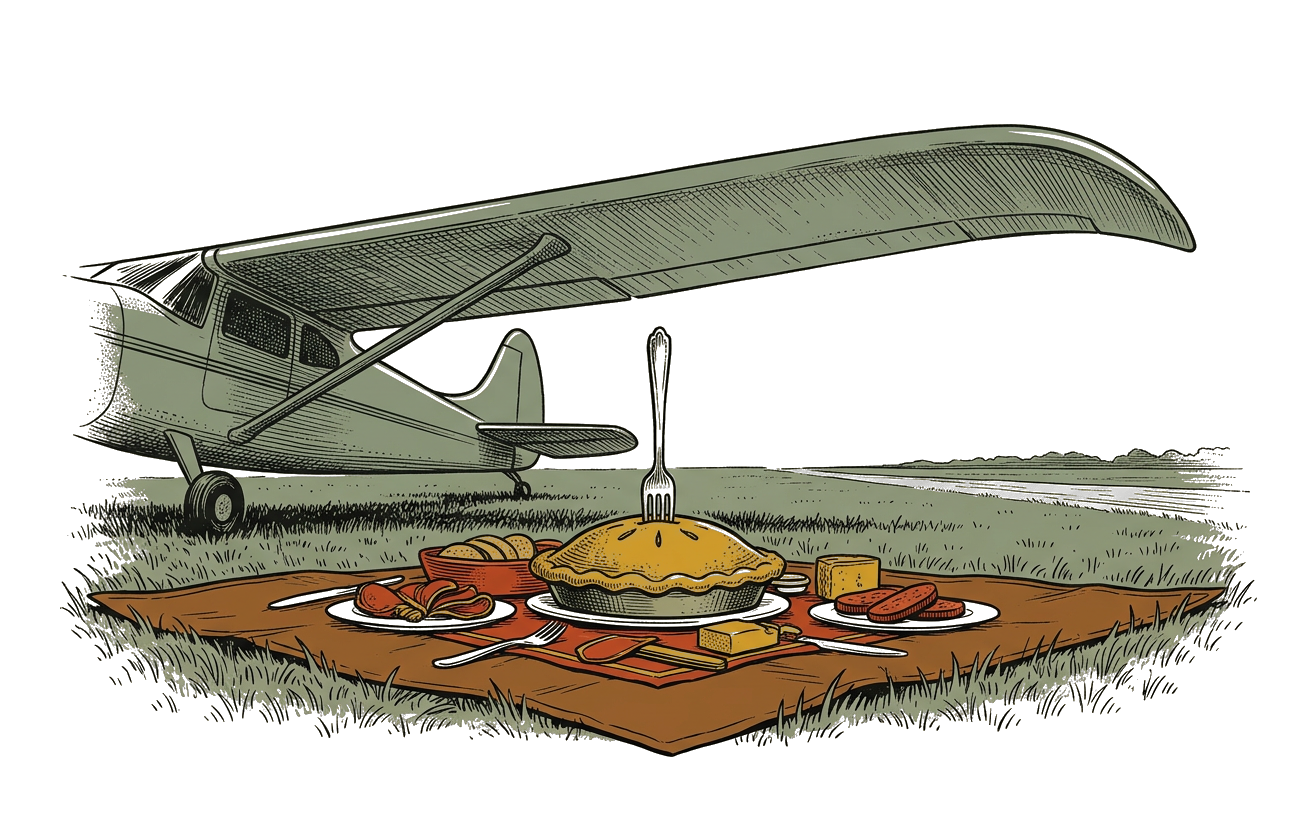
The food. The whole reason we’re here. Quality, variety, reliability, and pilot-community significance — all rolled into one flat score. A legendary burger joint can score as highly as fine dining. No snobbery. What matters is whether pilots fly specifically to eat here, and whether the food lives up to the trip.
There’s a critical walkability gate: when dining is within a 15-minute walk of the ramp, only those walkable restaurants count toward the Grub score. A single restaurant — no matter how famous — caps at 6. Scoring a 7 or 8 requires multiple excellent walkable options. Restaurants under 12 months old or with fewer than 20 reviews are flagged as provisional and capped at 1 until they prove themselves.
SceneRanked from 0 – 6 pts

Two sub-scores that capture what it feels like to be there. Setting (0 – 3) covers the visual impact — coastal cliffs, mountain panoramas, desert canyon approaches, or a charming town setting. Draw (0 – 3) asks whether the destination itself pulls you in — pilot heritage, off-field ecosystem, overnight potential, or unique cultural character.
They’re scored separately because a stunning grass strip above a river canyon and a vibrant resort town with courtesy cars to wineries are genuinely different kinds of appeal. A flat agricultural airport with nothing special scores a default 2 (Setting 1 + Draw 1). Earning higher requires specific evidence — dramatic terrain, a town worth exploring, or legendary pilot heritage.
OpsRanked from 0 – 6 pts
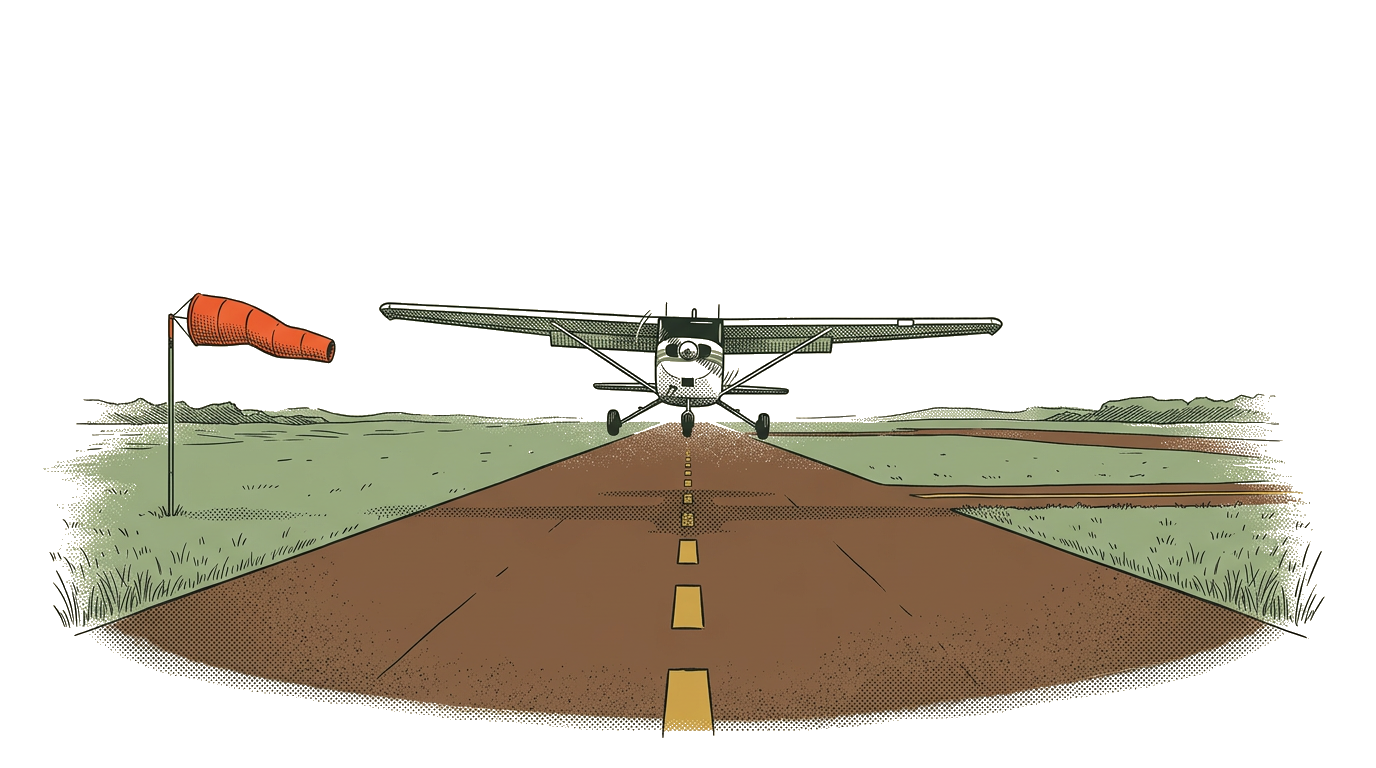
How pilot-friendly is the airport? Runway length, approach availability, terrain, density altitude, ramp fees, and FBO vibe — the full picture of what it takes to get in and out. A standard paved GA runway of 4,000+ feet in a benign environment defaults to a 5. A 6 means effortless — long runway, multiple approaches, low elevation.
Points come off for real challenges: persistent coastal fog, high density altitude with mountain terrain, short runways, significant ramp fees, or tricky airspace. Each genuinely challenging dimension drops the score. An airport with two serious challenges — say, 7,000-foot elevation plus Sierra terrain — scores a 2. Ops doesn’t gatekeep; it informs. Some of our best airports have low Ops scores because the food and setting are worth the effort.
AccessRanked from 0 – 3 pts

Ground transport — can you actually get from the ramp to the restaurant? On-field dining scores a 3. A safe, walkable 15-minute stroll on sidewalks or guaranteed rideshare in a major metro area gets a 2. Verified rental car, crew car, or shuttle is a 1. If you might be stranded on the ramp, that’s a 0.
Access has a direct relationship with Grub scoring: when Access is 2 or 3 (walkable), only walkable restaurants count toward the Grub score. When Access is 0 or 1 (vehicle required), Grub is scored on the full dining scene accessible by the confirmed transport method. The access penalty already captures the friction of needing a car; there’s no need to double-penalize the food.
FuelRanked from 0 – 2 pts

On-field 100LL availability. A 2 means confirmed fuel that’s convenient (self-serve or extended hours) and priced well below the regional average — the kind of price where pilots top off because it’s too good to pass up. A 1 means fuel is available but with typical FBO pricing, limited hours, or attended-only service.
A 0 means no 100LL on the field, or not confirmed in our data. We don’t guess — if fuel isn’t explicitly verified, it scores a 0. Fuel 2 is genuinely rare; most airports with fuel score a 1. Pilots are famously particular about fuel prices, so this category rewards the airports that actually deliver value at the pump.
The Three Tiers
Worth a Trip 21 – 25 pts
Drop everything. Fire up the engine specifically to come here. The food, the setting, and the experience justify the flight all on their own.
Worth a Detour 17 – 20 pts
Worth reshaping your cross-country route. You wouldn’t plan a whole trip around it, but you’d happily add a leg to your flight plan.
Worth a Stop 0 – 16 pts
Good if you’re passing through or need fuel. You won’t regret stopping, but you probably wouldn’t route specifically for it.
There’s also a value floor: an airport’s Grub + Scene must be high enough to justify its tier. An easy airport with cheap fuel and on-field access to a mediocre burger in flat farmland stays a Stop regardless of total score. The food and setting have to carry their weight.
The Editorial Override
Raw numbers don’t always capture the full picture. Some airports are iconic destinations that every pilot recognizes — places where the experience transcends what a five-category rubric can measure. When a high-scoring airport falls just below the Trip threshold, we evaluate whether it deserves an editorial override.
Overrides are selective and require a strong Experience Score — the combined Grub + Scene must be at least 10 out of 14. This ensures we’re only making exceptions for places where the food and the setting are genuinely outstanding, not airports that scored well on convenience alone.
Think of it as the editor’s prerogative. If the numbers say “Detour” but every pilot who’s been there says “Trip,” we trust the pilots. Sedona, Half Moon Bay, Oshkosh, Mackinac Island — these are places you plan a trip around, period.
The Provisional Flag
New restaurants — less than 12 months old or fewer than 20 public reviews — get their Grub score capped at 1 until they’ve proven themselves. We re-evaluate every six months.
This isn’t a penalty. It’s honesty. A brand-new spot might be phenomenal, but we’re not going to tell pilots to plan a trip around a restaurant that opened last month. When the reviews come in and the consistency is there, the score goes up. You’ll see the PROVISIONAL flag on airport cards where it applies.
Worked Example: Friday Harbor (KFHR)
Here’s how the numbers add up for one of our top-rated airports — a natural Trip that earns its tier on every dimension.
| Category | Score | Why | |
|---|---|---|---|
 | Grub | 8 / 8 | Ernie’s on the ramp, Downriggers, Vic’s, the brewery — multiple excellent walkable options with real variety |
 | Scene | 6 / 6 | Setting 3 (island approach over the San Juans) + Draw 3 (premier island town, whale watching, overnight destination) |
 | Ops | 4 / 6 | 3,000-ft runway with terrain and crosswinds — manageable but demands attention |
 | Access | 3 / 3 | Ernie’s is on the field; town center is a short walk |
 | Fuel | 1 / 2 | 100LL available, standard island pricing |
| Total | 22 / 25 | Worth a Trip |
Friday Harbor lands at 22 points — comfortably above the Trip threshold. The runway demands respect and fuel is island-priced, but the food is exceptional, the San Juan setting is stunning, and you walk from tiedowns to crab tots in minutes. That’s the system working as intended: when the dining and the destination are this strong, the operational challenges become part of the adventure, not a reason to stay home.
The Dataset
Airports
376
Tiers
55 / 209 / 112
trip / detour / stop
Avg Score
17.6 / 25
States
47
Regions
16